Speaking Task 8 · Free · 2026 CELPIP format

CELPIP Speaking Task 8: Describing an Unusual Situation

Five untimed CELPIP Speaking Task 8 questions, each with the picture on the screen and a spoken model answer. A thing with no name, a person on the phone who cannot see it, and a request you must not forget to make. Record yourself, reveal the model, then read how it is assembled.

30s prep · 60s speak No timer in this course Nothing recorded is uploaded
How this task works

What CELPIP Speaking Task 8 actually asks you to do

Task 8 closes the speaking section, and it is the strangest job on the test. Something odd appears on the screen. You are told you are somewhere, that you cannot take a photograph, and that you are phoning a named person. Describe it to them, and ask them something. Thirty seconds to prepare, 60 seconds to speak.

Every question below has the picture with it. That matters more on Task 8 than anywhere else on the test, because the words you reach for depend entirely on where your eye lands first, and a thing written out in a paragraph has already made those choices for you. Look at the sketch, take the 30 seconds, and hand the object to somebody who has never seen it. The only piece of the real exam missing here is the clock.

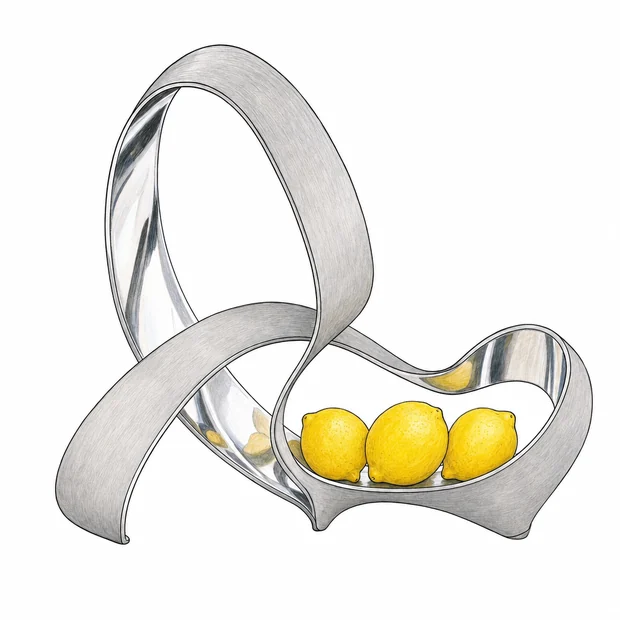
Now the thing that makes sense of the whole task. Underneath the yogurt cups and the honeycombed suitcases, Task 8 is a circumlocution test. The referent has no ready-made label. There is no word for one ribbon of steel bent into a loop that crosses itself twice and holds three lemons where it dips, so you cannot retrieve one, and the test knows that. It is measuring whether you can construct a name out of common words, geometry and comparison, in real time, for somebody who is not in the room. That skill is the single most useful thing an immigrant does with English in an ordinary week, which is presumably why it is the task they finish on.

Which is why "it is a fruit bowl" in the first five seconds is a disaster dressed as efficiency. You have handed over a label the object does not really have, and skipped the 60 seconds of building the rater actually wanted to hear.


The wrapper

Four beats, and everyone drops the fourth

Every Task 8 prompt wraps the description in a phone call, and the wrapper has four obligatory parts. Three of them take four seconds each. The fourth is the one being scored.

1
A reason you are there

"I am in our uncle's basement clearing the house." Nine words, and now the call has a purpose rather than being a description floating in space.

2
A reason they cannot simply look

"They have a no photography sign up, so I cannot show you." "There is no internet up here and I have no data." Sometimes the reason sits at their end rather than yours: if your sister is driving, you take the picture off the table for her. This beat is load-bearing, because without it the obvious question is why you are describing anything at all instead of sending a photo. It costs four words and candidates skip it constantly.

3
A named person

Ingrid. Emil. Delphine. Teodor. Sofia. The prompt gives you the name and the relationship, and the relationship sets your register. A cousin who repairs clocks for a living gets the name of every broken part. A sister on the highway gets "are you still driving?" before anything else.

4
An explicit closing request

"Should I get it for her?" "Which door do I want?" "Would it work in the living room?" This is the beat that gets dropped, and it is scored directly under Task Fulfillment. The description is the easy part. The ask is the part the call was for.

Notice how the model answers protect beat four. The first one puts the price immediately before the ask, so Ingrid has everything she needs to answer the question she is being asked. The second sets the ask up in its opening line, so the whole description is heard as evidence for a decision: "you need to come and see what your daughter has made." And they all keep it short, because a four word question at second fifty-eight is worth more than an elegant sentence you never reach.

If you take one thing from this page: run a timer on your own practice and check that you asked. Most candidates describe beautifully for 58 seconds and stop.

A correction

It is not always a surreal object

Most prep material shows you one weird mashup and implies that is the task. It is one family out of at least five, and expecting only that family is how candidates get ambushed.

The odd designer object

A thing built for a normal purpose in an abnormal shape. One ribbon of steel, bent into a loop that crosses itself twice, with three lemons sitting where it dips. The purpose is guessable; the form is not.

The improvised or repurposed thing

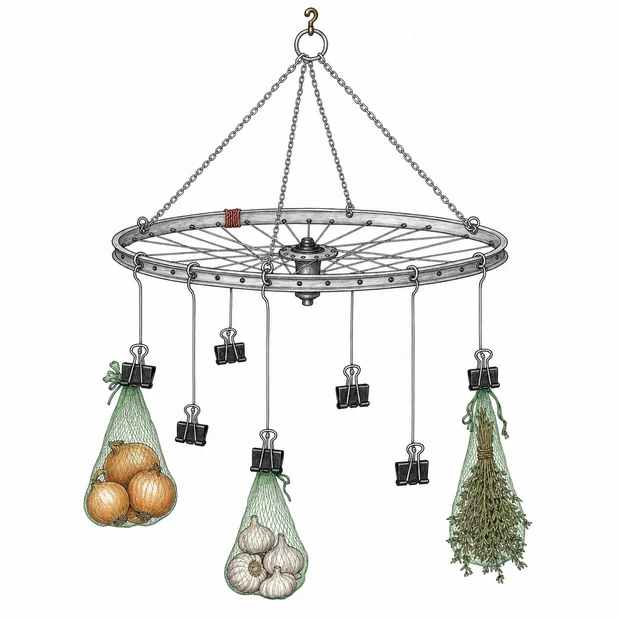
Something ordinary stripped down and put to work as something else. A bicycle wheel with the tire off, hanging flat from a ceiling. Describe the transformations in the order they were made.

The surreal mashup

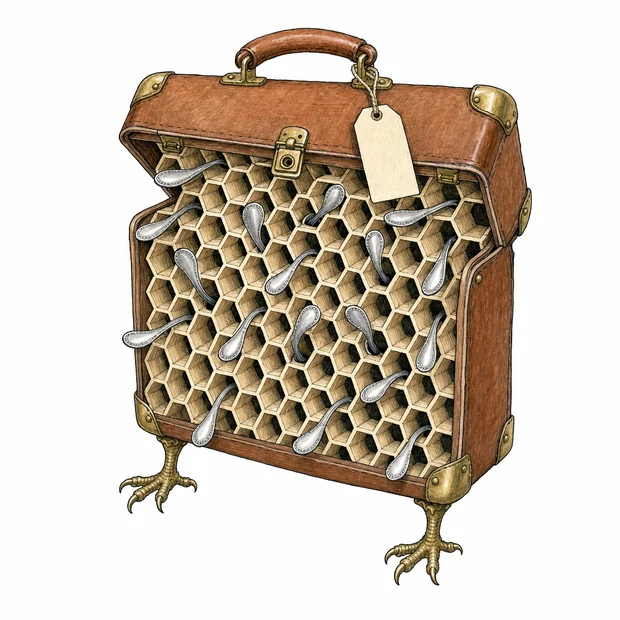
The family everybody prepares for. Two unrelated things fused, like a suitcase packed edge to edge with honeycomb. Worth knowing, not worth assuming.

The broken mechanism

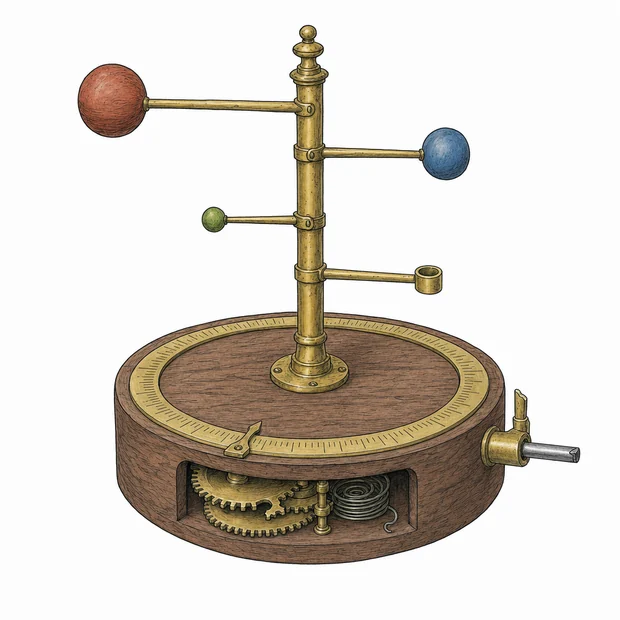
A familiar object failing in an unfamiliar way, where the oddity is in what it is doing rather than what it is. Here the vocabulary is the damage: a bare stub, an empty socket, snapped in half.

The spatial predicament, with no object at all

You are at a sports complex with four identical glass doors and you cannot work out which one to use. There is nothing to describe and everything to locate. Candidates who believe Task 8 must contain an object hunt for one, do not find it, and abandon the answer halfway. The marks here are in the spatial relationships: the building as a whole, then your position fixed by landmarks that cannot move, then left and right.

What unites all five is the principle underneath, and it is worth memorising in place of any list of object types: the referent has no ready-made label, so you must build one out of common words, geometry and comparison. That is true of a suitcase full of honeycomb and equally true of a spot on a pavement beside a bronze statue of a curler. If you have internalised that, no family can surprise you.

Official format

CELPIP Speaking Task 8 format at a glance

The 2026 CELPIP speaking format for the unusual situation task specifically.

Official name
Speaking Task 8: Describing an Unusual Situation
Position
Last of the 8 speaking tasks
Preparation
30 seconds, not skippable
Recording
60 seconds
What you see
One unusual thing, usually isolated on a plain background, plus a written scenario naming who you are calling. Every question in this course gives you both.
The frame
A phone call to a named person who cannot see it, ending in a request
Roughly
130 to 150 words at a natural pace: wrapper, anchor object, transformations, details, ask
Scored on
Content and Coherence, Vocabulary, Listenability, Task Fulfillment, which includes the closing request
Rater view

What raters actually reward in CELPIP Speaking Task 8

Five techniques. Together they are the entire craft of handing an object to somebody over a phone.

Start from one familiar thing
"Imagine a single ribbon of steel, about as wide as three fingers." "Picture an old brown leather suitcase, the proper hard kind with the metal corners." Give the listener something they already own before you change anything about it. Without an anchor they are holding six facts and no object, and nothing you say afterwards can rescue that.
Transform in build order
Cut the bottle in half, turn the top half upside down, drop it into the bottom. Describing the modifications in the order somebody made them is what makes an unnameable thing assemblable in another person's head. Random order produces a pile of facts.
Size by comparison
The biggest ball is a walnut, the smallest is a pea. A post about shoulder high. This is the core circumlocution skill and it beats measurement every time, because your listener can use it instantly and a number in centimetres has to be converted into a picture before it means anything.
Flag the strange part
"Here is the odd bit. All four cups face the same way around." Announcing the oddity before delivering it prepares the listener for the thing that has no name, and it is a coherence signal a rater can hear as clearly as a paragraph break.
Purpose on top of shape
"It hangs from the hub, so the whole wheel spins if you push it." "The inside is polished like a mirror, so a lemon sitting in it appears twice." Shape is concrete; the consequence is the abstract layer over it. Doing both in one clause is the pairing the top bands are built on.

There is also one thing to stop naming as the result too early and one thing to name deliberately. The mistake is handing over the label at second five. The technique is naming the purpose once, briefly, after the shape has landed: "the low dip is where the fruit goes." Seven words that reset the listener's picture before more detail arrives. The difference is that the second version was earned, and the listener built it with you.

And do not chase a technical word you are not sure of. If the noun is uncertain, the comparison is free and always works: a chandelier, a post, a funnel. A wrong technical term loses the listener completely, and a hesitation while you hunt for it costs you under Listenability. Nobody has ever lost a mark for saying "the thing they scan the books with".

Practise

5 CELPIP Speaking Task 8 questions with model answers

Every family of unusual thing except the one with no object in it, each drawn the way the real task puts it on the screen. Open one, look at it, record yourself with no clock running, then reveal the spoken model answer and every move it makes. Your recording stays in your browser: it is never uploaded and nothing here is scored.

Task 8Designer
A twisted steel ribbon bent into a crossing loop, cradling three lemons at its low dip.

A steel ribbon holding three lemons

One band of metal, crossing itself twice, high on one side and dipped to the table on the other, balanced on three points with nothing underneath. Call Ingrid, who is paying for half the wedding present, and ask whether to buy it.

Practise this question
Task 8Mashup
An upright leather suitcase packed with a wooden honeycomb sprouting teaspoons, standing on brass bird feet.

A suitcase packed with honeycomb

Your niece's degree show piece: a hard case on its end, lid gaping, wooden cells to the edges, teaspoon handles sticking out like bees. Describe it to her father Emil and ask him to come before Sunday.

Practise this question
Task 8Repurposed
A bicycle wheel hanging flat like a chandelier, ringed with clips and mesh vegetable bags.

A bicycle wheel over the counter

Tire off, hanging flat like a chandelier, spinning on its hub, clips dangling at different heights with the onions already in them. No data at the cottage, so ask Delphine down the landline how you are meant to use it.

Practise this question
Task 8Broken
A brass column on an oak base with four arms ending in balls, one socket empty.

A brass mechanism with a ball missing

Arms of different lengths, three ending in a painted ball and one in an empty socket, the crank snapped down to a bare stub. Name each damaged part for your cousin Teodor, who repairs clocks, and ask how to get it going.

Practise this question
Task 8Improvised
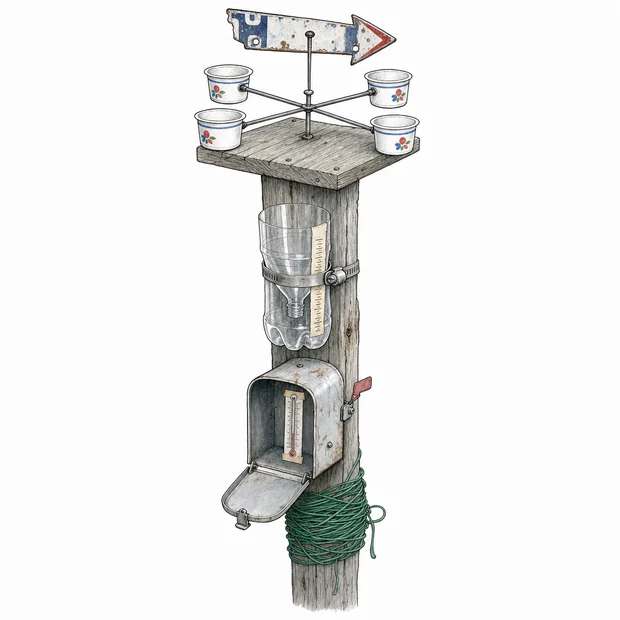
A weathered post topped with yogurt-cup spinners, a licence plate arrow and a cut-bottle funnel.

The post left standing in the back yard

Yogurt cups on crossed bicycle spokes, an arrow cut from a licence plate, a pop bottle inverted into itself, and every cup facing the same way around. Sofia is driving and cannot look at her phone, so you take the picture off the table yourself: keep it, or take it down?

Practise this question
Tips

Speaking tips for the unusual situation task

Decide the ask during the prep

Not the opening. The ask. It is four words, it is the beat that is scored, and it is the one that runs out of clock. Know it before you start and the description can take whatever time is left.

Get the wrapper out in two sentences

Where you are, what you found, why they cannot see it. "Ingrid, hi. I am at that home shop on Bank Street and I think I have found the wedding present, but they have a no photography sign up, so I cannot show you." Three beats, twelve seconds, done.

Anchor to their world

As tall as our front door, not two metres. If you are calling your partner, use the things you both own. It is more useful to them and it is exactly the audience-tuning the top bands are listening for.

Say the price just before the ask

"It is a hundred and fifty. Should we buy it?" Ingrid is paying for half of it and cannot answer a question about whether to buy something without knowing what it costs. The ordering is not decoration, it is what makes the request answerable.

Practise on your own kitchen

Pick any object and describe it in 60 seconds without saying its name. A garlic press, a bottle opener, a stapler. It is a genuinely fun drill, it needs no material, and it is the exact skill this task measures.

Keep the phone register

"It is me." "Bear with me." "Are you still driving?" This is a call to somebody you know, not a museum label. A formal register here is a tone error, and tone is scored.

Questions

CELPIP Speaking Task 8 FAQs

What is CELPIP Speaking Task 8?

CELPIP Speaking Task 8 is Describing an Unusual Situation. Something odd appears on the screen and you describe it down the phone to a named person who cannot see it, ending in a request. You get 30 seconds to prepare and 60 seconds to speak. It is the last of the eight speaking tasks in the 2026 CELPIP format.

What are the four beats of a CELPIP Speaking Task 8 answer?

A reason you are there, a reason your listener cannot simply look at it themselves, a named person you are calling, and an explicit closing request. The fourth is the one candidates reliably drop, and it is scored under Task Fulfillment. Never let the 60 seconds run out before you make the ask.

Is CELPIP Speaking Task 8 always a surreal object?

No, and this is the commonest misconception. The odd object is one family of several. Others include a designer piece with no obvious name, an improvised or repurposed thing, a broken mechanism, and a pure spatial predicament with no object in it at all, such as being unable to work out which of four identical doors to use. Expect variety.

Why should I not just name the object in Task 8?

Because the whole task exists precisely because the thing has no ready-made name. Underneath, Task 8 is a circumlocution test: you have to assemble a description out of ordinary words, shapes and comparisons. Saying it is a fruit bowl in the first five seconds hands over a label the object does not really have and skips the sixty seconds of building the rater wants to hear.

Does this Task 8 practice show you the picture?

Yes. All 5 questions come with the object drawn for you and isolated on a white background, the way the real Task 8 puts one thing on the screen. That matters more on this task than any other, because the words you reach for depend entirely on what your eye lands on first, and a description written out for you has already made those choices.

How should I start describing the object in Task 8?

With one familiar thing your listener already knows, then change it. Imagine a single ribbon of steel. Picture an old brown leather suitcase. Picture a bicycle wheel with the tire taken off. Give them somewhere to put the details first, then apply the transformations in the order they were made. A listener with no anchor is holding six facts and no object.

How do I describe sizes in Task 8?

By comparison, not in units. A doorway about the size of your fist. About as tall as our front door. About two and a half metres. Comparisons to things in your shared world are instantly usable, while a list of measurements is precise, unspeakable and impossible to picture.

What if the Task 8 prompt has no object in it?

Then the marks are in the spatial relationships instead. If you are standing at one of four identical entrances and cannot work out which to use, the task is to locate yourself: describe the building as a whole, then fix your position with landmarks that cannot move, then split the surroundings into left and right. Candidates who assume every Task 8 needs an object abandon these halfway.

Does this speaking practice course score my answer?

No. There is no timer and no evaluation anywhere in the practice course. You record yourself so that you can hear yourself, the recording stays in your browser and is never uploaded, and then you reveal a spoken model answer with its structure, key phrases and common mistakes.

Is this Task 8 practice updated for the 2026 CELPIP format?

Yes. Everything here follows the 2026 CELPIP speaking format: eight tasks, a timer that runs per task and resets on every advance, and Task 8 running 30 seconds of preparation followed by 60 seconds of recorded speech as the final task of the section.

Build it out loud, then hear it back

Five unusual things, no clock, no score. Record your description, then check the last five seconds. Did you actually ask them anything?